




 Robert Duane Ballard (June 30, 1942 - ) is an American undersea explorer, marine scientist, and US Naval officer who has been on over 65 underwater expeditions in submarines and deep diving submersibles. He found the Titanic and many other wrecks. He also revolutionized undersea exploring by using remotely controlled submersible robotic devices (including Argo-Jason; Argo is a remotely controlled submersible vehicle with cameras, and Jason is carried in Argo and sent from it to collect samples and perform other functions). Ballard founded the JASON project and continues to explore the sea.
Early Career
Ballard was educated as a marine geologist and geophysicist. He joined the Navy in 1967, working on undersea projects including undersea mapping. In 1973 - 1974, using a deep-diving submersible, Ballard explored the Mid-Atlantic Ridge, an enormous underwater mountain range in the mid-Atlantic Ocean.
Deep Sea Life by Vents
In 1977, while exploring in the submersible ALVIN near the Galapagos Islands (in the Pacific Ocean off the coast of Ecuador), Dr. Ballard and J. F. Grassle, on Project FAMOUS, discovered giant worms (called Riftia) and other organisms living deep in the sea, beyond the depth where people though that life could be sustained. These huge worms were clustered around underwater hot springs (near ocean rifts) from which they get energy. The underwater vents substitute for the Sun’s energy. The worms grow in long tubes and are over 10 feet (3 meters) long. In 1979, Dr. Ballard found deep water volcanoes called “black smokers” located off the coast of Baja California in the Pacific Rise; they spew extremely hot mineral-rich water up chimneys formed by mineral deposits (it is so hot that it could melt lead).
Sea Water
Ballard discovered that the water of the earth’s oceans is cycled through the earth’s crust, changing its mineral composition in the process. The water goes down through cracks in the crust until it hits very hot rock where it becomes superheated and dissolves minerals from the rocks. Then it shoots upward through the vents. This explains why sea water contains the minerals it does (this was unexplained by previous theories).
Telepresence
Ballard has developed a new exploration technology that he calls “telepresence,” in which remotely-controled robotic cameras explore the deep sea, relaying their information to the surface through fiber optic wires. His first search robot, called Argo, was completed in 1985. (It was named for the Argo, a mythical ship that carried Jason on his search for the Golden Fleece, the woolly hide of a golden ram.) This new technology has revolutionized the exploration of the deep seas (and will do the same for the exploration of space).
Recovery of the Titanic
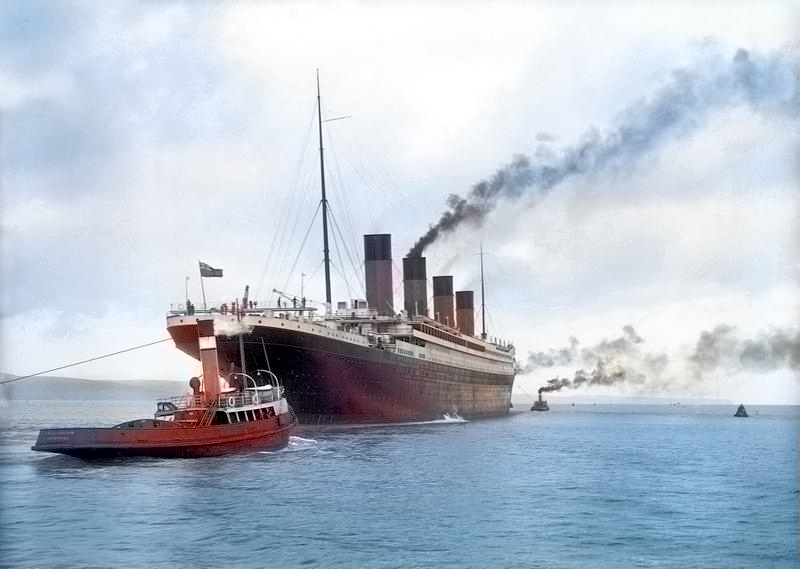
Argo’s first accomplishment was helping to find the wreck of the R.M.S. Titanic in 1985. This “unsinkable” ocean liner was about 12,000 feet deep in the cold North Atlantic Ocean. Ballard and his team found the Titanic on September 1, 1985, using sonar, but had to wait a year to return and view the wreck up close in the submersible ALVIN, also using JASON to view it.
JASON Project
After receiving a tremendous amount of mail from children about the Titanic adventure, Dr. Ballard founded the JASON Foundation for Education, in 1989. The JASON project is named for Jason, the mythical Greek explorer who sailed the seas in a ship named “Argo” in order to find the golden fleece. This project lets children learn about and follow global deep sea exploration. A Remotely Operated Vehicle (ROV) called Jason is sent to explore the sea down to 20,000 feet, and Jason’s video signals are broadcast live via two-way satellite to students in schools and museums around the world.
More Wrecks
In later expeditions, Ballard used the Argo-Jason system to find the German battleship Bismarck (sunk during World War II) in 16,000 feet of water, the ocean liner Lusitania (sunk by a German torpedo during World War I), and PT109, John F. Kennedy’s ship that was sunk in the Pacific Ocean during Word War 2.