
|
| You might also like: | Tuatara Printout | Kiwi Printout | Moa Printout | Wallaby Printout | Cockatoo Printout | Today's featured page: Astronomy and Space K-3 Theme Page |
| More Information on Birds | EnchantedLearning.com Kakapo |
Animal Printouts Label Me! Printouts |
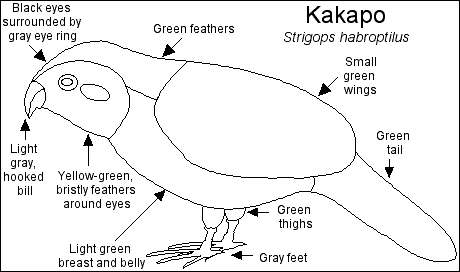
The kakapo had no natural enemies on its native islands of New Zealand. Although once plentiful, there are now far fewer than 100 kakapo remaining in New Zealand; it is a critically endangered species. Their decline is mostly from predatory animals (like cats, dogs, stoats, ferrets, and rats) that settlers brought with them to New Zealand. The kakapo was also eaten by Maori and European settlers. Kakapo means 'night parrot' in the Maori language.
Anatomy: The kakapo is the heaviest parrot in the world; it weighs up to 8.8 pounds (4 kilograms). It is up to about 2 feet (60 cm) long. Males are bigger than females. This bird's soft green feathers camouflage it in its leafy environment. The kakapo has sturdy legs and small wings that are only used to glide from trees. It walks with its head close to the ground. The face is owl-like.
Diet: Kakapos are herbivores (plant-eaters). They eat roots, seeds, leaves, buds, cones, fruit, and flowers.
Reproduction: Unlike other parrots, male kakapos gather in a lek to compete with the other males and to call females with a deep booming sound. There are 2 to 3 eggs in each clutch (a set of eggs laid in one nesting period). The eggs are laid in a hollow tree cavity. The female incubates the eggs for 10 weeks, leaving the eggs exposed when she leaves to find food.
| Search the Enchanted Learning website for: |